Education for All: Shaping the Future of Education
Nurturing the dreams of Nuca Molas’ children through learning and collaboration, together paving the way for better education for all.
5 min read
•
November 22, 2026
Intro
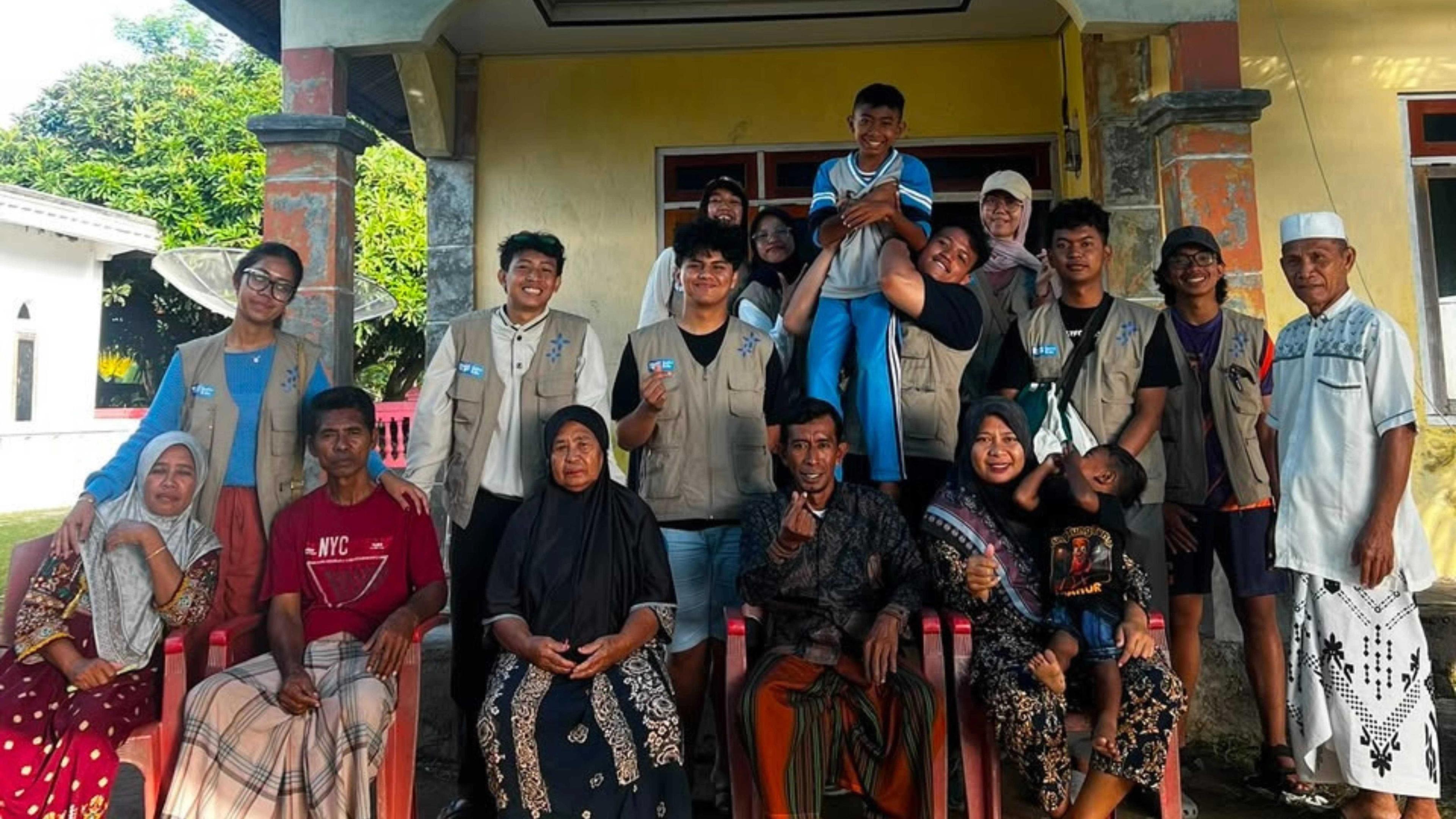
"Education is the most powerful weapon which you can use to change the world." So said Nelson Mandela. Education is the foundation for bringing the world toward a better future. In the Sustainable Development Goals (SDGs), quality education is the fourth goal, following no poverty, zero hunger, and good health and well-being. Quality education is the right of every child, including the children of Nuca Molas Village, Satar Mese Barat District, Manggarai Regency, East Nusa Tenggara (NTT). This village was the site of SatuEdu Foundation's Education for All program in 2026.
Nuca Molas Village is located on Mules Island, separated from the mainland of East Nusa Tenggara Province, and reaching it requires a small boat ride of about twenty minutes. Nuca Molas is known for its captivating natural beauty and has become one of the most famous tourist destinations in East Nusa Tenggara, drawing visitors in large numbers.
Unfortunately, the state of education in Nuca Molas is not as beautiful as its stretches of savanna, white sand, and open sea. Mules Island has only 3 elementary schools and 1 junior high school. There is no senior high school on the island. Children who wish to continue to senior high school must move away to Ruteng, the capital of Manggarai Regency, which is 70 kilometers away. As a result, children are often forced to stop their education after junior high school, especially when their family's economic situation does not allow otherwise.
The existing schools also have facilities and infrastructure far below those of schools in the city. At SDN Pulau Mules, for example, the library building has had to be converted into a classroom. There is also a building whose roof has collapsed and can no longer be used. Inside the classrooms, many wooden desks have rotted, with nails sticking out. Daily lessons still rely on a blackboard and chalk, erased with old pieces of cloth. With such limited facilities and infrastructure, learning activities cannot run optimally.
From our social mapping and discussions with parents and teachers, these inadequate educational conditions are a major concern for them, particularly regarding the future of Nuca Molas's children. Yet these children have dreams, which they shared with us with shining eyes, and those dreams are worth fighting for.
The SatuEdu team came through the Education for All program with a vision of advancing education in Nuca Molas. To realize this vision, we designed three main programs: Sehati, Focus Group Discussion (FGD), and Larasati. Each program was carefully designed around the needs and conditions of the local community so that its benefits could be felt to the fullest. In running the programs, we also emphasized collaboration with teachers, parents, and local community leaders, because we are fully aware that quality education requires the active participation of many parties. We hope these three programs will have a positive impact on the people of Nuca Molas and help shape a better future for education.
Sehati: Sehat Hari Ini, Hidup Bahagia Nanti
Sehati (Sehat Hari Ini, Hidup Bahagia Nanti or Healthy Today, Happy Tomorrow) is a program created with the aim of educating the children of Nuca Molas Village. Its key focus areas include healthy living habits and communication skills with one another. In the initial design, the series of activities was divided into five segments: morning exercise, education on healthy living tips, material review, a simple workshop, and a community clean-up to collect litter. The expected learning outcomes of Sehati were for the children of Nuca Molas Village to develop the self-awareness to live more healthily, to care for their surroundings both ecologically and socially, and to embrace the spirit of gotong royong (mutual cooperation).
When we carried out social mapping on the first day, we modified much of the Sehati Program's content to make it more relevant to the root problems of education in Nuca Molas Village. We realized that some healthy habits, such as exercise, were already part of the children's daily lives, so we added a new set of activities: basic English lessons using flashcards with themes close to the children's everyday lives, such as fruits, animals, body parts, and so on. This was because, in reality, English instruction at the Nuca Molas elementary school was still far from optimal. Teachers at the school also stated that learning was considerably hindered by a lack of teaching materials. We therefore made flashcards that were also adapted for children who are still learning to read and spell, so they could be used repeatedly — not only to enrich English vocabulary, but also as a tool to train early literacy and memory.
In practice, the Sehati Program opened up a new understanding of the realities of education in Nuca Molas Village. Most of the planned Sehati activities did not take place and were replaced almost entirely by English lessons using flashcards. Morning exercise was held with the children and local residents to start the day, followed by preparing the classroom before lessons began. However, the classroom was far from conducive, pushing us to make immediate adjustments so learning could still go ahead. We divided the children into five study groups so they could absorb the lessons better. Every time a child answered a question correctly or memorized the meaning of a word from the flashcards, a star sticker was the reward they eagerly awaited. The children's enthusiasm for learning rose sharply once the lessons became more visual, interactive, and appreciative. Although Sehati's main objectives were not fully realized, this approach became a realistic solution we could offer to support the children of Nuca Molas and respond to their needs.
Focus Group Discussion (FGD) Report: Shaping the Future of Education for Nuca Molas
One day before the Focus Group Discussion (FGD), we and the entire Education for All committee visited residents' homes in Nuca Molas Village, particularly in Konggang Hamlet. This was done as an initial approach to get to know the community better and to gain a first picture of the state of education in Nuca Molas. As we went around, we talked with residents about the condition of education in the village, the challenges they face, and their hopes for the future. The residents welcomed us very warmly. They were very open in explaining and sharing what education in Nuca Molas is like.
On this occasion, we also introduced the goals of Education for All: Shaping the Future of Education and shared our plan to hold an FGD with teachers and parents as a space to gather their aspirations and discuss educational conditions in greater depth. These initial interactions went very well. Teachers and parents showed enthusiasm to attend and participate in the FGD. Some residents even expressed their appreciation and gratitude, as activities like this gave them a chance to share experiences, problems, and aspirations that had rarely had a space for discussion. This was a positive start for us in building an open and collaborative atmosphere for the FGD.
The Focus Group Discussion (FGD): Shaping the Future of Education for Nuca Molas was held over two days. The first day focused on mapping educational conditions and problems through open discussions with teachers and parents, while the second day was directed toward validating the mapping results, discussing recommended roles for each stakeholder through a recommendation playbook, and making a joint statement of commitment to support the development of education in Nuca Molas.
On the first day, the event opened with welcoming remarks from the SatuEdu team. Before the discussion sessions, participants first took part in a Problem Elaboration activity. This session aimed to invite participants to revisit the direction of Nuca Molas's development, which currently focuses heavily on the tourism sector. The material was intended to build awareness that while tourism development remains important, it needs to go hand in hand with strengthening education as the foundation for developing human resources and the village community's future.
We then introduced the four pillars of education: access to education, quality of learning and educator welfare, the influence of policy and governance, and the sustainability and future of education. These four pillars served as the main framework for participants to view educational conditions more holistically — from children's opportunities to receive an education, the learning process and teachers' conditions, the roles of government and the community, to the sustainability of education in the years ahead.
After that session, participants were divided by stakeholder group: educators and parents. Teachers were placed in one group, while parents were split into two groups due to their larger numbers. Each group held discussions based on an FGD module tailored to the participants' roles and experiences. The discussions began with trigger questions, followed by an open discussion about the state of education in Nuca Molas and the changes participants had experienced.
The discussion then moved to the four pillars of education through key questions designed to gather the various experiences and problems faced by teachers and parents. Once all topics had been covered, participants entered a prioritization and consensus session to determine which problems were most critical, which parties have a role in solving them, and which solutions were most realistic to implement. The results of the first day's discussions were then compiled and used as the basis for developing the Education for All Playbook.
The second day was held as a continuation of the FGD process. It began with a shared meal to build a more informal atmosphere and strengthen interaction among the SatuEdu team, village officials, teachers, and parents before entering the main session. This was followed by a presentation of the Education for All Playbook, which had been developed from the results of the first day's FGD.
In the presentation, the team restated the results of the education problem mapping and the draft recommended roles for each stakeholder. The playbook not only contained the problems identified but also outlined how each role should be put into action, success indicators, challenges and ways to overcome them, as well as the dos and don'ts for each party in supporting education in Nuca Molas.
After the presentation, the event continued with an open discussion involving village officials, educators, and parents. This session was used to validate the drafted recommendations and give each stakeholder the opportunity to share responses, corrections, or additional ideas based on the real conditions they face. In this way, the substance of the playbook did not come from a single perspective but could be jointly agreed upon through discussion with the parties who will carry out the recommendations.
The discussion results were then finalized into a playbook draft adjusted to input from all stakeholders. The next stage was for the relevant stakeholders to give their responses to the finished playbook. The event closed with a summary of the activity's results, appreciation for all participants, and the presentation of plaques as a token of gratitude to the stakeholders involved. Overall, the two days were designed as one continuous series: the first day to understand and map the problems, and the second day to define roles, validate solutions, and build a shared commitment to supporting the future of education in Nuca Molas.
On the first day, the discussion was very open and interactive. After the Problem Elaboration session and the presentation of the four pillars of education, teachers and parents began connecting the material with their own experiences in supporting and delivering education in Nuca Molas. Participants actively shared the conditions they face, ranging from limited access to education, family economic conditions, learning quality, and teacher welfare, to communication between parents and schools. The discussion also revealed that support for children's learning at home is still limited, communication between teachers and parents generally happens only when report cards are handed out, and there are considerable differences in children's learning abilities and focus. Teachers also raised various challenges such as limited facilities, uncertainty about teacher welfare, the fit between the curriculum and students' conditions, and the need for stronger support from the government.
In the prioritization and consensus session, participants jointly determined which problems were considered most important and who should play a role in addressing them. The discussion did not focus only on problems but also began moving toward solutions that teachers, parents, and village officials could carry out. One of the outcomes was the concept of a daily guidebook for students. Parents stated that a guidebook containing material for all subjects, with interactive quizzes and engaging visuals, could help children build good habits. In addition, parents and teachers stated that a forum for discussion among parents, teachers, and village officials is needed to regularly discuss the progress and evaluation of education in Nuca Molas. The results of all these discussions then became the main basis for developing the Education for All Playbook.
On the second day, the discussion was aimed at reviewing and validating the recommended roles set out in the playbook. Although village officials were unable to attend that session, teachers and parents responded positively to the recommendations and showed a willingness to help carry out the roles that had been formulated, particularly in increasing support for children and improving communication between schools, parents, and village officials.
Because village officials were unable to attend on the second day, we followed up through a direct discussion with them, bringing the aspirations and discussion results from the teachers and parents. The village officials responded well and were open to these aspirations. From this discussion, we also gained the insight that village officials face limitations because many of the village's needs must be handled independently, while support from the regency government is felt to be less than optimal. This shows that developing education in Nuca Molas requires stronger collaboration — not only between teachers and parents, but also between the village government and higher levels of government.
All the discussions were held in a participatory way and produced a more comprehensive understanding of the state of education in Nuca Molas. The FGD results also did not stop at mapping problems; they continued with drafting recommendations in the playbook and communicating them back to the relevant stakeholders as a first step toward collaboratively realizing the solutions.
Larasati: Langkah Awal Raih Semangat Cita-Cita
Larasati (Langkah Awal Raih Semangat Cita-Cita, or "First Steps Toward Pursuing Your Dreams") is an activity aimed at broadening the knowledge of Nuca Molas's children about professions that exist — and do not exist — around them. In the initial design, the series of activities opened with an interactive performance. Facilitators acted out various professions — such as medical workers, sanitation/security officers, engineers, and farmers — using signature attributes, followed by simple hands-on practice from each field. The expected learning outcomes of Larasati were for the children of Nuca Molas Village to broaden their horizons, have strong motivation to learn, and dare to dream big for their future.
When we carried out social mapping on the first day, we modified much of the Larasati Program's content to make it more relevant to the root problems of education in Nuca Molas Village. We realized that the children's knowledge of professions was still limited, mostly because they had not been directly exposed to those professions (for example, no doctors are practicing in Nuca Molas and there is no hospital), while learning at school was often held back by a lack of inspiring learning materials. We therefore enriched the material for each profession with clear step-by-step guidance on how to reach that job, from what to study to the educational path that can be taken.
In the field, Larasati opened up a new understanding of education and future aspirations in Nuca Molas. The opening drama we performed showed that the children are still eager to learn about the world beyond Nuca Molas and are brave enough to dream big.
Kelas TUNAI
In addition to focusing on supporting education in Nuca Molas Village, a financial literacy session called Kelas TUNAI was also held, initiated by our collaboration partners ShopeePay, SeaBank, PT Commerce Finance, and PT Lentera Dana Nusantara, on 3 August 2026. Through this interactive session, the partners invited the local community of Nuca Molas Village, including fishermen and MSME owners, to discuss practical everyday money management — from managing income and expenses and distinguishing needs from wants, to building a saving habit and staying alert to the risks of digital transactions.
Lessons Learned
Through the Education for All program, we came to realize that limited access to proper education is still a real challenge faced by many children, both in remote parts of Indonesia and in many other parts of the world. Along the way, we saw the reality on the ground: there are people with a strong drive to move forward, and there are others who still need encouragement to take the first step.
Although SatuEdu's initial contribution is still modest, we hope the Education for All program can spark meaningful change. Going forward, we hope this effort will continue to grow and inspire more parties who share a similar vision to advance education. In the end, we believe that equal access to quality education is the key to ensuring that prosperity can be enjoyed inclusively by more people.
Written by
Natasha Arsanty Widyahapsari, Gandes Kanara Zahra, Jonathan Diego Susanto, Faza Fauziah Soerya, Nadri Axelle, Muhammad Ibnu Zaki Burhanuddin.